
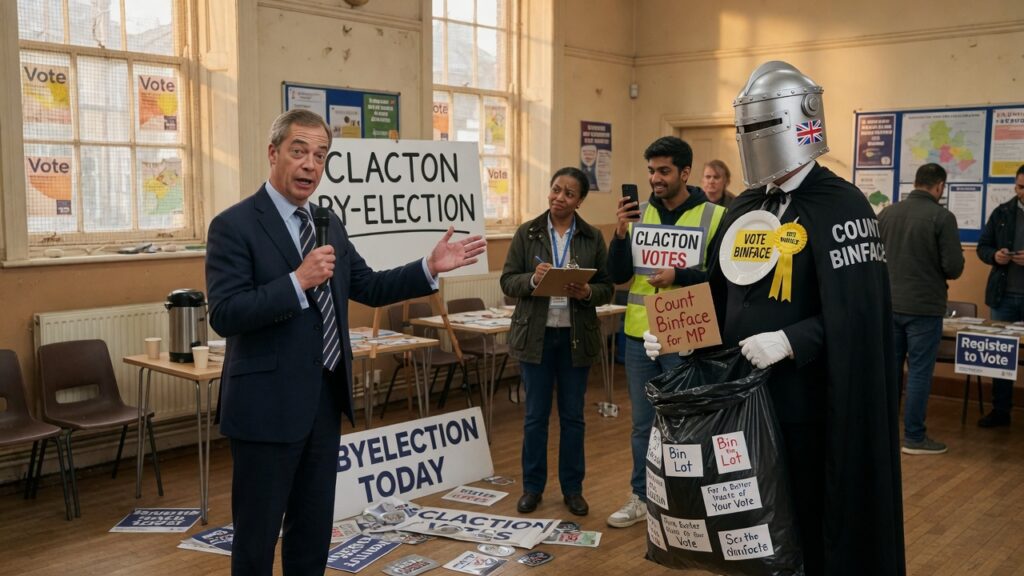
Farage vs Count Binface: UK’s Weirdest Byelection
The upcoming byelection in a key UK constituency has descended into political theater, pitting veteran campaigner Nigel Farage against the satirical force known as Count Binface. What began as a standard contest has transformed into a viral spectacle blending populism, protest voting, and meme-driven campaigning.
The Constituency and Stakes
The byelection was triggered by the resignation of the sitting MP, thrusting a previously unremarkable seat into national headlines. With turnout historically low in such votes, analysts predict record engagement fueled by social media buzz. Voters face a stark choice between Farage’s hardline reform agenda and Binface’s absurdist platform promising free Greggs pasties and a “space laser” defense system.
Digital platforms are amplifying the race. TikTok clips of Binface’s manifesto launches have amassed millions of views, while Farage’s Reform UK team leverages X (formerly Twitter) for rapid-response messaging. This intersection of traditional politics and tech-savvy disruption marks a new era for British elections.
Who is Nigel Farage?
Nigel Farage, the former UKIP and Brexit Party leader, needs little introduction. A master of media manipulation, he has positioned himself as the voice of disillusioned voters. His campaign emphasizes immigration controls, anti-woke rhetoric, and economic nationalism.
Farage’s team has invested heavily in data analytics and targeted ads on Facebook and Google, a strategy honed during the 2016 referendum. Critics argue this approach risks polarizing the electorate further, yet it undeniably drives engagement metrics.
Enter Count Binface
Count Binface, the alter ego of comedian Jonathan David, brings a different energy. Clad in a metallic helmet and cape, Binface has run in multiple elections, including the London mayoral race. His platform includes satirical policies like abolishing homework and nationalizing Greggs.
Binface’s campaign thrives on digital virality. Instagram Reels and YouTube sketches mock establishment politics while subtly highlighting real issues like cost-of-living pressures. Supporters, many Gen Z, see him as a protest against “boring” politics, with his online following growing exponentially through algorithmic amplification.
Campaign Clashes and Memes
The contest has produced unforgettable moments. Farage dismissed Binface as a “joke candidate” during a hustings event, only for Binface to respond with a viral video featuring AI-generated imagery of Farage in a bin. Social media erupted, trending the hashtag #BinfaceVsFarage for days.
Tech elements dominate both sides. Reform UK’s app notifies supporters of polling stations, while Binface’s volunteers use Discord servers to coordinate flash mobs. This hybrid of offline stunts and online coordination exemplifies modern electioneering.
Public reaction splits along generational lines. Older voters favor Farage’s gravitas; younger demographics lean toward Binface’s humor. Polls show the race tightening, with undecideds swayed by meme warfare.
Broader Implications
This byelection highlights tech’s transformative role in UK politics. Algorithms reward outrage and absurdity, potentially undermining substantive debate. Yet it also democratizes access, allowing outsiders like Binface to challenge heavyweights.
Experts warn of deeper risks: misinformation spread via deepfakes and echo chambers. However, the spectacle may boost turnout, a net positive for democracy.
What Happens Next?
As polling day approaches, expect intensified digital barrages. Farage will double down on policy substance, while Binface leans into entertainment. Regardless of the winner, this contest signals a shift toward hybrid campaigns blending personality, satire, and technology.
The UK’s political landscape has never been stranger—or more online. Voters in this constituency are deciding more than a seat; they’re shaping how future elections unfold in the digital age.