
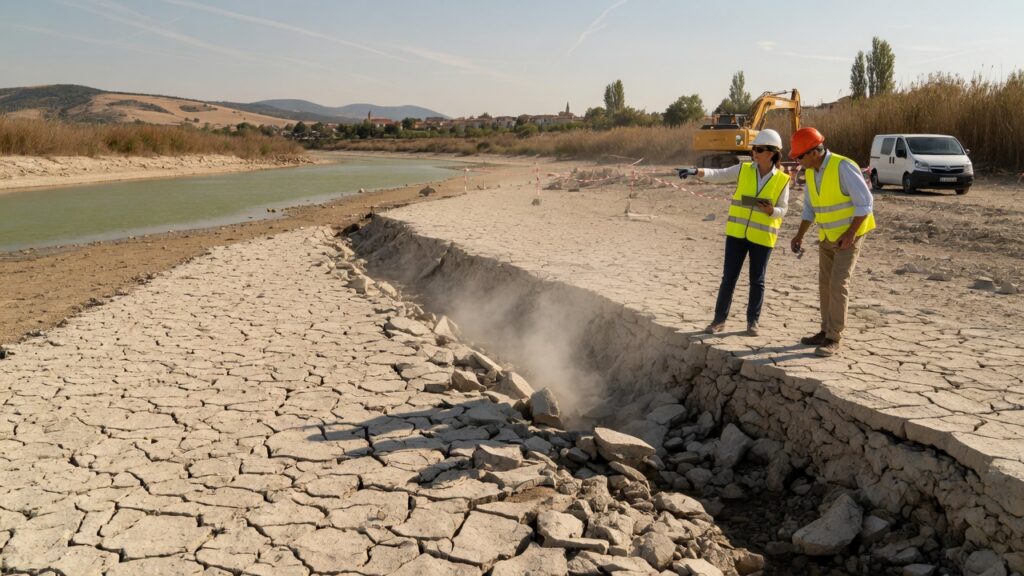
Accelerating climate patterns are forcing European nations to detonate riverbeds in an effort to sustain commercial shipping, exposing the fragile links between physical waterways and the continent’s digital infrastructure. This approach, while intended to keep critical transport routes open during prolonged droughts, underscores a broader challenge for technology sectors reliant on just-in-time delivery of hardware and components.
Climate Pressures and Infrastructure Strain
Extended dry spells have reduced water levels in major rivers such as the Rhine and Danube, limiting barge capacity for bulk goods. Authorities have turned to controlled explosions to deepen channels, a tactic that highlights the limits of traditional infrastructure maintenance under shifting environmental conditions. For technology operators, these rivers serve as primary arteries for moving servers, networking equipment, and data center components from ports to inland facilities.
Supply Chain Disruptions in the IT Sector
Low river levels directly affect the logistics of high-value electronics. When barge traffic slows, companies must reroute shipments via road or rail, raising both costs and delivery times. Data center builders, cloud providers, and hardware manufacturers face increased lead times for critical parts, which can delay project timelines and elevate capital expenditures. These delays compound when multiple facilities compete for the same limited transport capacity during peak expansion periods.
Energy and Cooling Dependencies
Many European data centers depend on stable regional power grids that include hydroelectric sources tied to river systems. Reduced flows not only threaten generation capacity but also complicate water-based cooling strategies used at some sites. Infrastructure planners are now evaluating software-driven load-balancing tools and predictive analytics to shift workloads during periods of constrained energy availability.
Policy and Resilience Strategies
Technology policy discussions are increasingly focused on diversifying supply routes and investing in predictive modeling for climate-related disruptions. Governments and industry groups are exploring incentives for localized manufacturing of networking gear and incentives for redundant logistics networks. These measures aim to reduce single-point vulnerabilities exposed by extreme weather events that prompt unconventional interventions such as riverbed blasting.
- Adoption of digital twins to simulate river-level scenarios and their effects on transport schedules
- Integration of real-time IoT sensors along waterways for early-warning logistics adjustments
- Development of policy frameworks that link climate adaptation funding to digital infrastructure resilience
Continued monitoring of these developments will be essential for technology leaders seeking to maintain operational continuity amid evolving environmental constraints.