
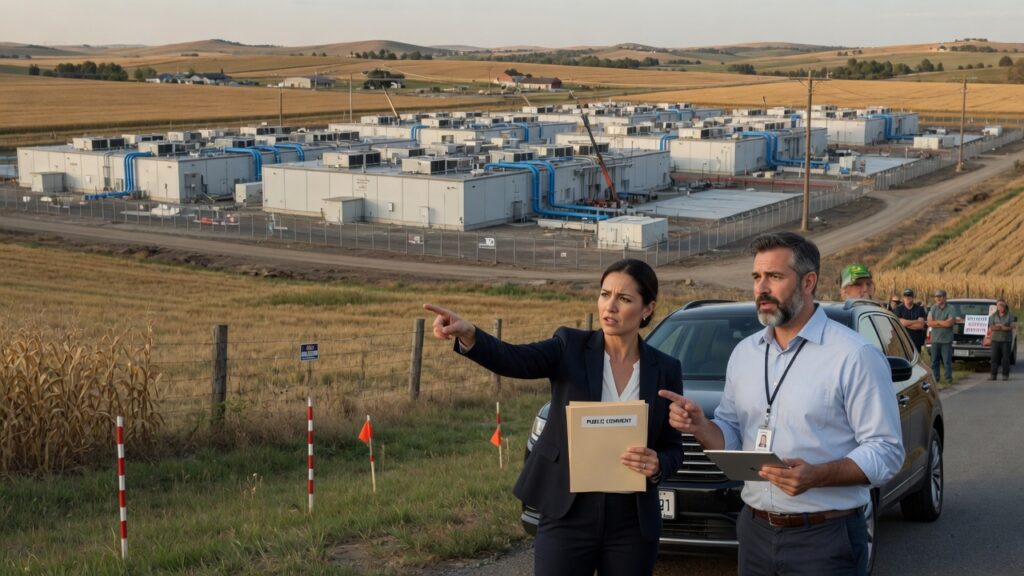
Everyone loves the idea of AI until the data centers powering it start sucking up local electricity like a black hole and rumbling louder than a fleet of trucks at 3 a.m. Suddenly towns are staging their own version of the data centers backlash and political U-turn reasons, turning what used to be rubber-stamped projects into front-page fights over power bills and peace and quiet.
The AI Boom Meets Real-World Power Drains
Cloud providers and AI labs have been racing to build hyperscale facilities, but the same infrastructure that once ran quietly in the background now risks overloading grids in small communities. Residents notice when their rates climb and streetlights flicker, while developers scramble to explain why one facility can draw as much power as a mid-sized city. The result is a classic case of tech optimism colliding with utility bills.
Noise, Heat, And Other Uninvited Guests
Beyond electricity, the constant drone of cooling fans and backup generators turns quiet suburbs into industrial zones overnight. Local officials who once championed the jobs and tax revenue are now fielding complaints about everything from water use for evaporative cooling to the visual blight of windowless warehouses. It is hard to sell the future when the present sounds like a jet engine idling in your backyard.
Why Politicians Are Suddenly Changing Their Tune
The data centers backlash and political U-turn reasons become obvious once voters start connecting higher utility rates to the latest AI announcement. Elected leaders who green-lit projects with minimal scrutiny now face recall petitions and packed town halls, prompting quick pivots toward stricter zoning, higher impact fees, and demands for renewable energy offsets. The flip-flops may look abrupt, but they track directly to polling data showing residents prioritizing reliable power over abstract promises of economic growth.
Implications For Cloud And Cybersecurity Strategy
For the IT industry the pushback forces a rethink of site selection, edge computing architectures, and even workload placement. Companies that once defaulted to massive centralized builds are exploring smaller, distributed facilities or shifting intensive training jobs to regions with surplus renewable capacity. Cybersecurity teams also watch closely, because rushed approvals and local hostility can delay critical infrastructure upgrades needed to patch vulnerabilities at scale.
Real-World Impact On Infrastructure Planning
Utilities are now requiring data center operators to fund grid upgrades or sign long-term power purchase agreements before shovels hit the ground. This raises project costs and timelines, but it also creates new opportunities for on-site solar, battery storage, and demand-response programs that treat AI workloads as flexible rather than always-on. The towns winning these negotiations end up with stronger local infrastructure and fewer surprise rate hikes, while the industry learns that community consent is no longer optional.