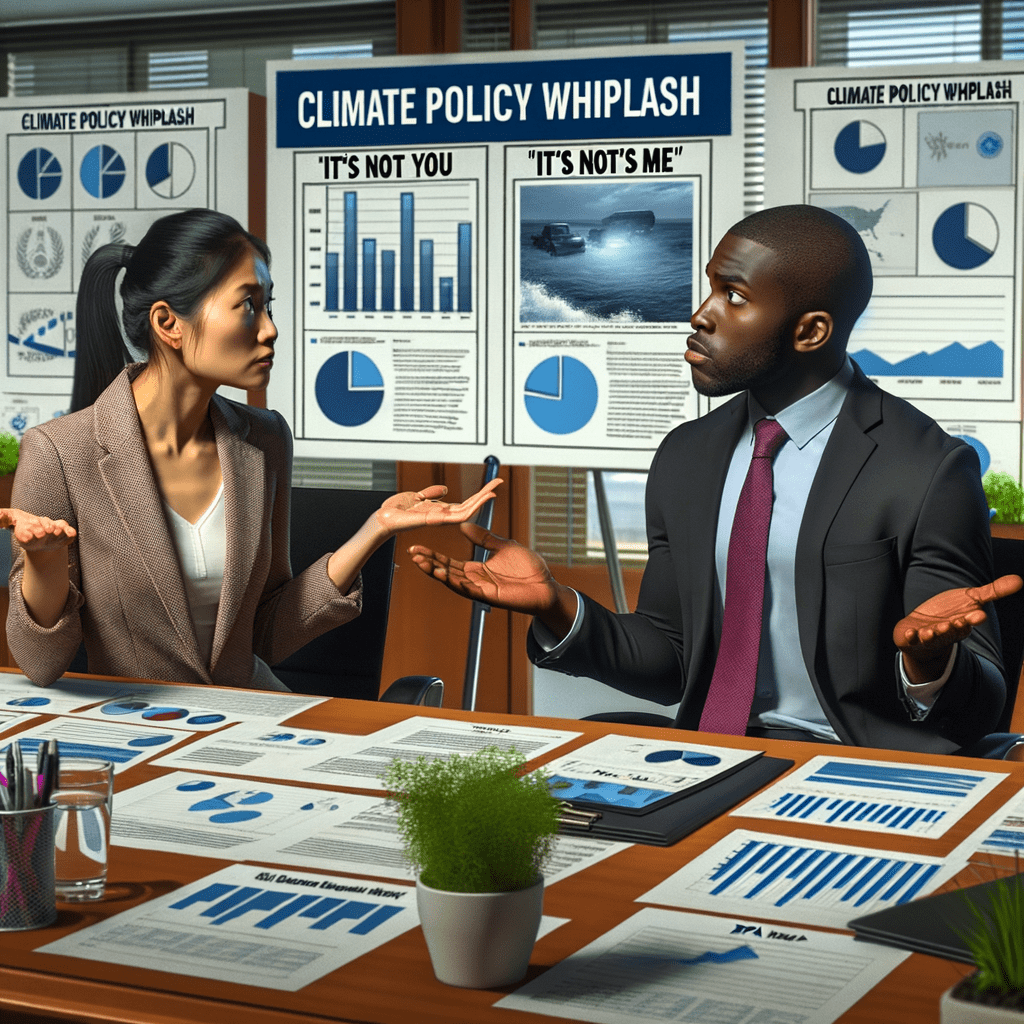
Imagine getting a text from a long-term partner that says, “Hey. We need to talk.” Your heart sinks. Then comes the follow-up: “It’s not you, it’s me. I’m just in a weird place right now.” That’s basically what just happened between the Environmental Protection Agency (EPA) and a few decades of climate science. This sudden EPA climate change policy reversal has given everyone whiplash, leaving the global community feeling like it just got ghosted after a series of great dates. Let’s unpack this bureaucratic breakup.
The Honeymoon Phase: When Policy and Science Were BFFs
For a while there, things were great. The EPA and climate science were inseparable. They went everywhere together: international conferences, policy briefings, you name it. They had a shared Google Doc of goals, a Trello board for tracking carbon reduction, and a relationship built on peer-reviewed data. The policy was basically a promise ring, a commitment to use the best available science to make decisions. Think of it as a perfectly functioning software integration—data flowed seamlessly from the lab to the legislature, and everyone agreed on the key performance indicators (KPIs).
The Breakup Text: Anatomy of the Policy Reversal
So what happened? The official reason is less “we’ve grown apart” and more “we’ve decided to deprecate the API you were using.” An EPA climate change policy reversal often boils down to a change in interpretation or priority. It’s like your company suddenly deciding to switch from tracking sales in dollars to tracking them in, say, rubber chickens. The old sales data isn’t wrong, it’s just not relevant to the new, bizarre metric. The agency isn’t denying the science exists; it’s just… putting it in an “archive” folder for now. The new policy might require different models, different economic assumptions, or a focus on a different set of variables. It’s the ultimate bureaucratic “we’re pivoting.”
Ghosted: What Happens When You Leave the Planet on Read?
This sudden switch leaves everyone else in a bit of a lurch. The international community is essentially a massive group project, and one of the key members just announced they’re redoing their part of the slideshow in a different font, in a different language, and maybe won’t turn it in on time. This creates a few headaches:
- Compatibility Issues: Other countries and organizations were building their own policies based on the previous US framework. Now they have to debug the new system and hope their work still connects.
- Loss of Trust: When a key player changes the rules mid-game, it makes future collaboration tricky. It’s hard to plan a project when you’re not sure if your main partner is going to change the entire scope at the last minute.
- System-Wide Confusion: The reversal creates uncertainty for industries and states that were planning for the long-term based on the old rules. It’s the policy equivalent of a software update that removes your favorite feature without warning.
So, Are They Ever Getting Back Together?
Is this breakup permanent? In the world of policy, “permanent” is a strong word. These relationships are often cyclical. Think of it less as a divorce and more as a “we’re on a break.” The data is still there, patiently waiting in a server farm somewhere. Future administrations or new directives could easily reboot the old system, pull the science out of the archive folder, and send a “U up?” text to the scientific community. For now, the world is watching this complicated relationship status, hoping they can at least agree on a custody arrangement for the planet.
Leave a Reply