
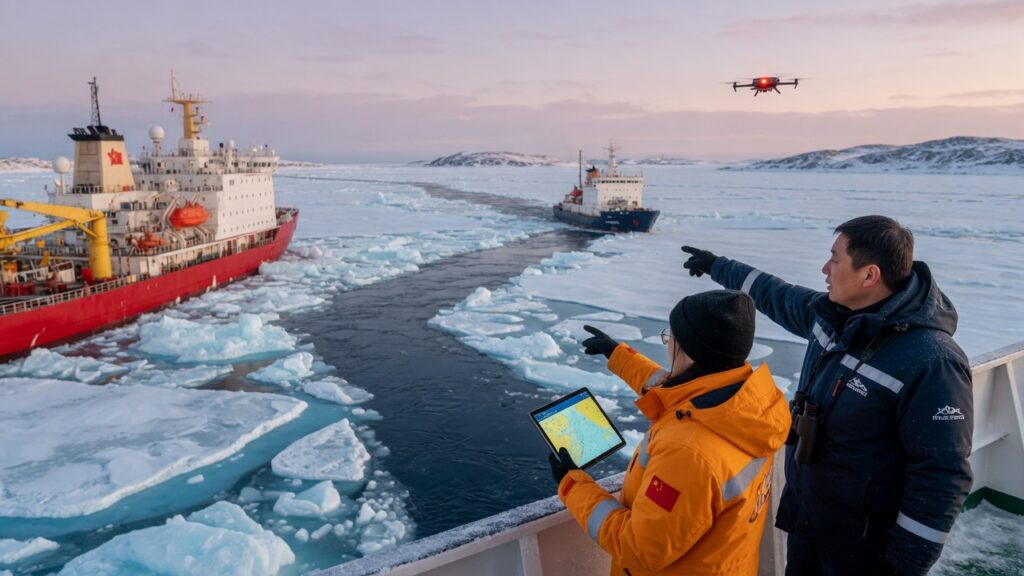
Climate change isn’t just raising sea levels—it’s handing China a potential Arctic shipping shortcut that’s redrawing global supply chain maps with the kind of quirky efficiency that makes logistics managers both excited and nervous. As melting ice opens routes like the Northern Sea Route, the china arctic shipping route climate impact ties directly into tech infrastructure, from faster hardware deliveries to new demands on satellite networks and cybersecurity.
Climate Trends Fueling Supply Chain Shortcuts
Broad warming trends are turning once-impassable Arctic waters into viable corridors, linking Asia to Europe in ways that bypass traditional chokepoints. It’s like nature optimizing a global network graph, but with unpredictable variables that could disrupt everything from semiconductor shipments to cloud hardware rollouts. The humor lies in how these ‘shortcuts’ might shave weeks off transit times, yet introduce fresh quirks like ice-class vessels needing specialized navigation software.
China’s Arctic Play: Flex Or Necessity?
Beijing’s investments in polar-capable fleets and port infrastructure suggest a clever strategic move rather than pure happenstance. This isn’t just about melting ice; it’s a flex that positions China to control key nodes in emerging trade networks. For the IT sector, it means potential advantages in routing critical components through less congested paths, though it also raises questions about data sovereignty when ships traverse international Arctic waters.
Tech And Infrastructure Ripple Effects
These new routes could accelerate supply chains for data center equipment, allowing hyperscalers to deploy servers faster amid booming AI demand. However, Arctic conditions demand ruggedized IoT sensors, reliable satellite comms like Starlink alternatives, and robust cybersecurity protocols to guard against interference in remote zones. The funny part? What starts as a climate-driven shortcut might end up requiring billions in tech upgrades just to keep the digital economy’s hardware flowing smoothly.
- Faster global connectivity reducing latency for edge computing setups.
- Increased risks of cyber threats targeting polar navigation systems.
- Policy shifts around Arctic data centers and undersea cable routes.
Real-World Impact On The IT Industry
Ultimately, the china arctic shipping route climate impact highlights how environmental changes intersect with infrastructure strategy, forcing tech firms to rethink everything from procurement to risk management. It’s a reminder that in the world of bits and bytes, even melting ice can force a clever reroute—or a costly detour.