Category: Global Protocols

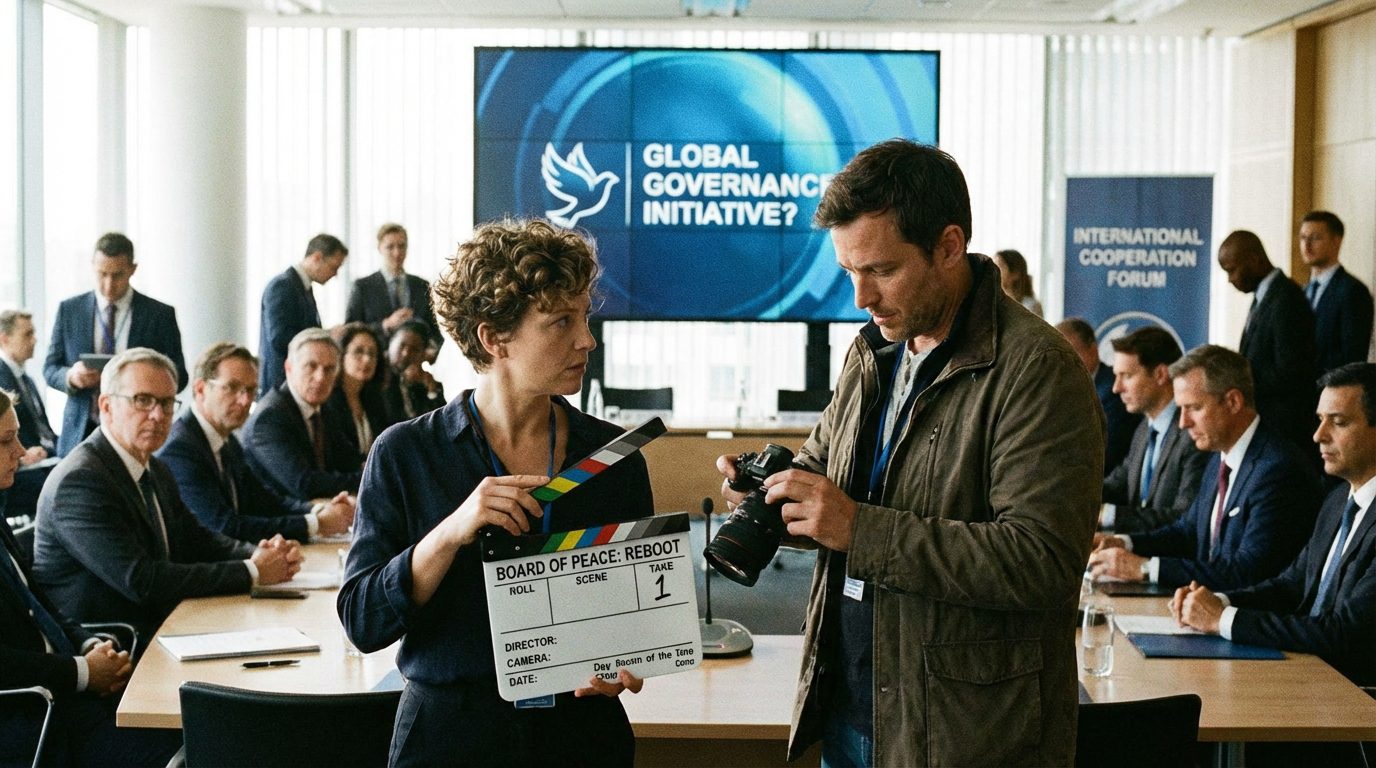
  • Board of Peace: Is This Global Governance or a Hollywood Reboot?

    Board of Peace: Is This Global Governance or a Hollywood Reboot?

    In the grand theater of international relations, every so often a new character enters stage left, promising to solve the plot. This season’s debut is the “Board of Peace,” an oversight body for Gaza reconstruction that feels less like a UN subcommittee and more like a Silicon Valley startup that just secured its Series A funding. It has a sleek name, a mission statement full of synergistic keywords, and the unenviable task of debugging one of the world’s most complex legacy systems. Forget slow-moving diplomacy; this is governance as a fast-follow, disruptive product launch.

    The Spec Sheet: What’s Under the Hood?

    On paper, the Board of Peace is an elegant solution to a chronic problem. Its core mandate is to provide independent, real-time oversight of reconstruction funds and material entry into Gaza, effectively acting as a trusted third-party API between donors, regional powers, and the on-the-ground reality. The feature list is impressive:

    • Real-Time Transparency Module: A public-facing dashboard to track every bag of cement, replacing the old system of “sending an email and hoping for the best.”
    • Multi-Factor Authentication for Materials: A vetting process designed to ensure that resources are used for their intended civilian purposes, preventing system exploits.
    • Cross-Platform Compatibility: Engineered to interface with the often-incompatible operating systems of various NGOs, governments, and international bodies.

    It’s a technocrat’s dream, a workflow designed to minimize friction and maximize accountability. But as any IT professional knows, the gap between the flowchart and the factory floor can be immense.

    System Integration or Full-Stack Replacement?

    The key question for us observers is whether the Board of Peace is merely a patch for the existing global governance framework or a beta test for a whole new one. Traditional institutions, with their labyrinthine approval processes and dial-up-speed decision-making, often feel like they’re running on Windows 95. This new body seems designed to be cloud-native, agile, and scalable.

    This represents a fascinating pivot. Instead of trying to reform the monolithic legacy code of older institutions, the international community seems to be spinning up specialized microservices to handle specific critical tasks. It’s a pragmatic, if slightly chaotic, approach. Why spend a decade debating reforms to the mainframe when you can just build a nimble app to handle the payment processing?

    Known Bugs and Feature Requests

    Of course, no V1.0 launch is without its potential issues. The primary bug report will likely be geopolitical latency—the time it takes for all parties to agree on a single data point. There are also potential compatibility conflicts with deeply entrenched political interests that don’t play well with new APIs. The system’s ultimate success will depend on whether its architecture is robust enough to handle the inevitable denial-of-service attacks from political spoilers. For now, we watch with professional curiosity. The Board of Peace for Gaza reconstruction isn’t just a humanitarian initiative; it’s a live stress test of a new model for getting things done. Let’s hope the system doesn’t crash.

  • Greenland: The Quiet Island Causing a Global Geopolitical Meltdown

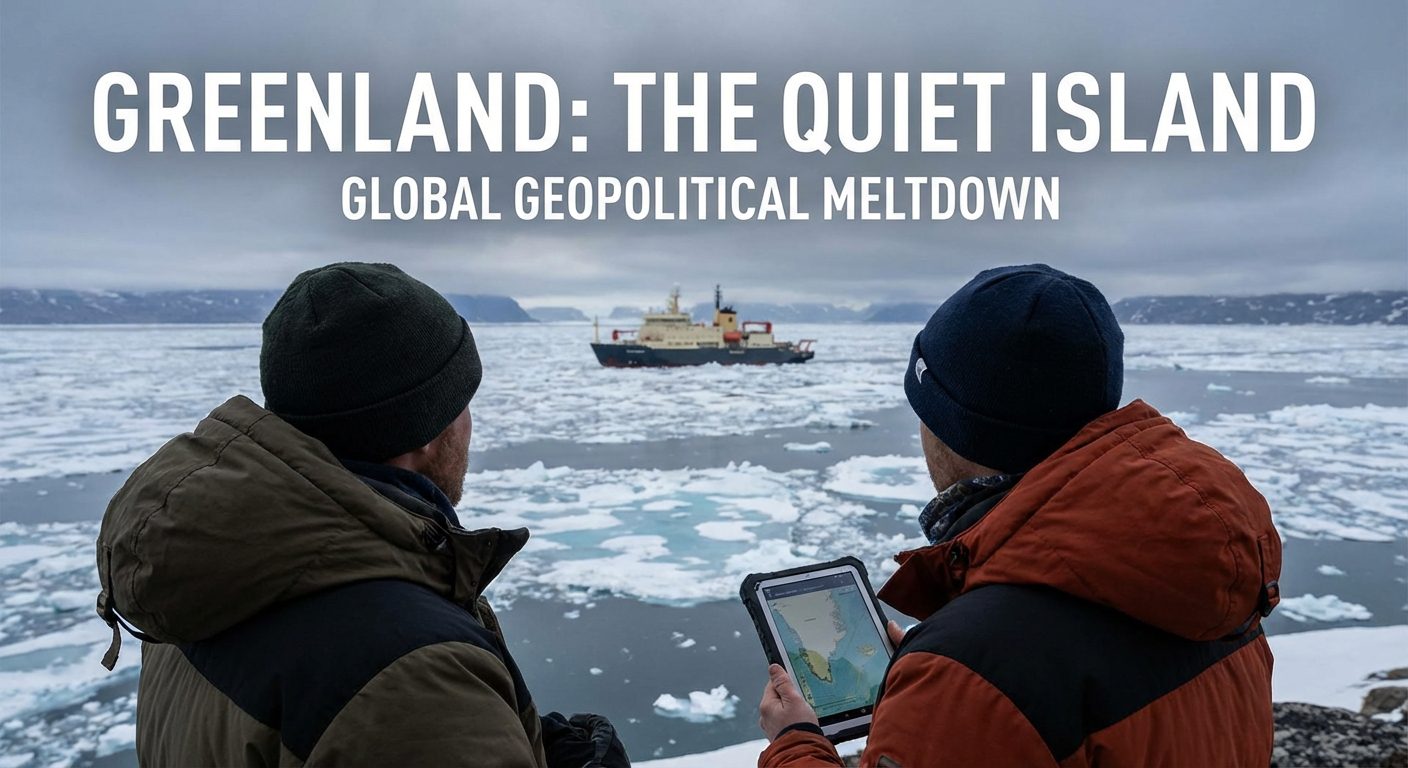
    Greenland: The Quiet Island Causing a Global Geopolitical Meltdown

    Let’s be honest, until recently, Greenland was that quiet coworker you barely noticed. It sat in the corner of the world map, massive but silent, mostly known for ice and a misleading name. Suddenly, however, every global superpower is sliding into its DMs. The United States tried to buy it, China declared itself a “near-Arctic state” (a geographic stretch akin to me calling myself a “near-astronaut”), and Russia is dusting off old military bases like it’s preparing for a high school reunion. This sudden popularity contest has turned the island into the epicenter of a slow-motion Greenland geopolitical crisis, and it’s more revealing than a corporate email sent to the wrong person.

    So, Why is Everyone Swiping Right on Greenland?

    It boils down to a classic case of a global software patch with unintended consequences. The bug? Climate change. The accidental feature? Opportunity. The ice is melting, which, while catastrophic for the planet, has suddenly turned the Arctic into a hot commodity. Here’s the breakdown:

    • The World’s Newest Shortcut: As the ice recedes, new shipping lanes like the Northwest Passage are opening up. This is the geopolitical equivalent of finding a traffic-free route through a city that’s always gridlocked. Control the route, and you control a massive slice of global trade.
    • A Treasure Chest Under the Ice: Greenland is sitting on a colossal stash of rare earth minerals. These aren’t just shiny rocks; they’re the secret sauce in everything from your smartphone to electric vehicles and advanced weaponry. With China currently holding most of the world’s supply, every other nation is desperately searching for a new dealer. Greenland just became the kid in the playground with the rarest, most valuable trading cards.
    • Location, Location, Location: Look at a globe. Greenland is the ultimate strategic high ground, a massive, unsinkable aircraft carrier parked between North America and Russia. For military planners, it’s the perfect spot to set up surveillance systems, monitor submarine traffic, and generally keep an eye on the neighbors.

    A Very Cold (and Awkward) War

    What makes the Greenland geopolitical crisis so fascinating is that it’s not being fought with tanks, but with investment portfolios and infrastructure proposals. It’s a bureaucratic battle royale. China arrives offering to build airports. The U.S. counters by opening a consulate and offering development aid. Denmark, Greenland’s official sysadmin, is trying to manage user permissions while Greenland itself weighs the promise of economic independence against the peril of becoming a pawn in a global chess game. It’s a messy, complicated, and frankly, absurd situation where the future of global power might just be decided by who offers to build the nicest port in a place with more polar bears than people.

  • China’s GDP Report: Hitting Targets with Creative Economics and Statistical Magic

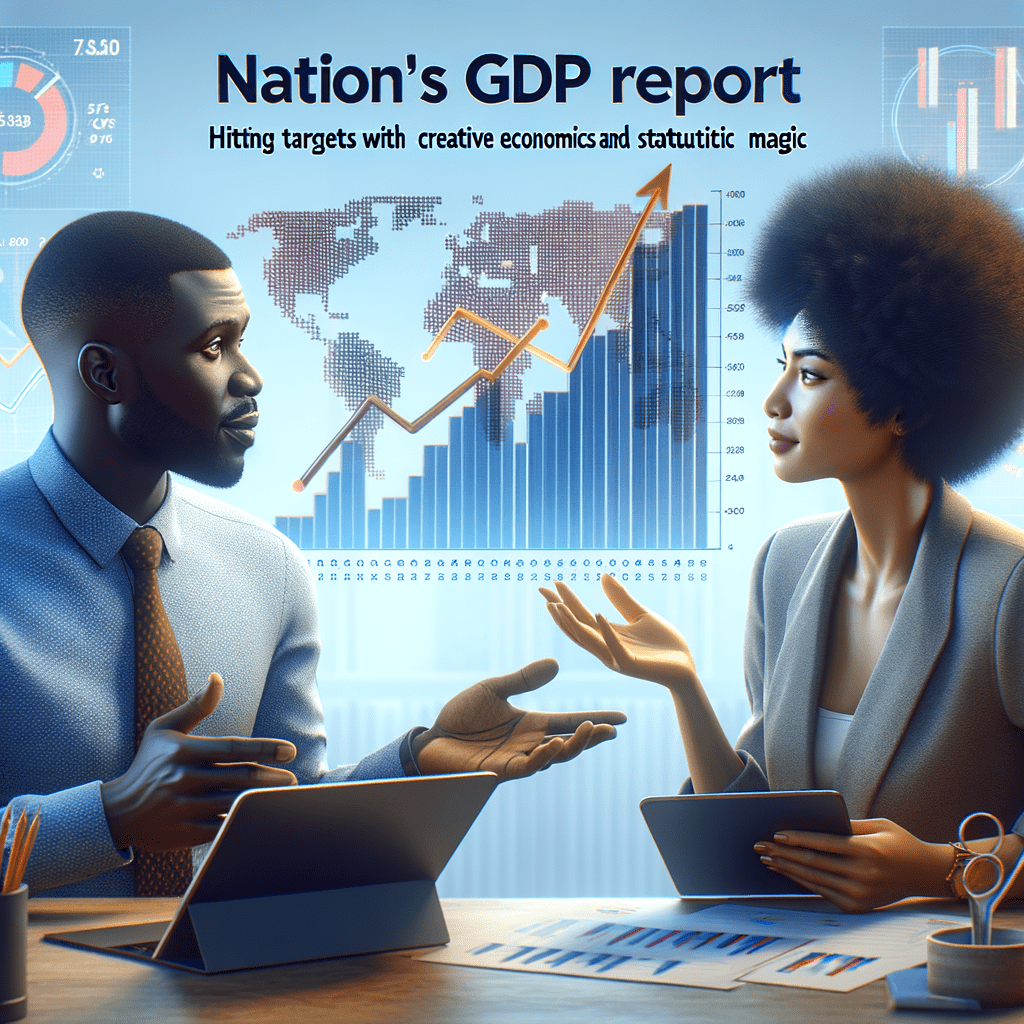
    China’s GDP Report: Hitting Targets with Creative Economics and Statistical Magic

    There’s a special kind of dread every project manager knows. It’s the end of the quarter, the bigwigs want to see the dashboard, and the metrics are stubbornly, uncooperatively… red. So you dive in, re-categorize a few expenses, count ‘user engagement’ in a very generous new way, and suddenly, you’re green. Congratulations, you’ve just engaged in a bit of creative accounting. Now, imagine doing that for the world’s second-largest economy. Welcome to the wonderful world of china economic growth data unusual methods, where hitting the 5% target feels less like an economic outcome and more like a successful software patch deployment just before the deadline.

    The Patch Notes: A Look Under the Hood

    When official GDP numbers are released and they land squarely on the government’s target with the precision of a guided missile, discerning analysts don’t just celebrate. They grab a strong coffee and start reading the source code. What they often find is a masterclass in statistical flexibility.

    • The Provincial Sum-Up Glitch: One of the longest-running features in China’s economic reporting is the curious case of the provincial math. For years, if you added up the GDP reported by all the individual provinces, the total would magically be larger than the national GDP figure. It’s like every regional office claiming they drove 110% of company sales. The central statistics bureau then acts as the system admin, running a de-duplication script to produce a more ‘harmonized’ national figure.
    • The ‘Imputed Rent’ Variable: Did you know that if you own your home, you are technically generating economic value by providing housing services to yourself? This ‘imputed rent’ is a standard part of GDP, but it’s also a wonderfully squishy number. How you calculate that value—based on market rates, construction costs, or a dartboard—can conveniently nudge the final GDP figure up or down. It’s the economic equivalent of adding `// TODO: Refactor this later` to a critical function. It works for now.
    • The Infrastructure Spending Hotfix: Facing a potential slowdown? The classic playbook involves a massive infrastructure spending spree. Build a dozen airports, a few hundred miles of high-speed rail, maybe a whole new city. Whether these projects generate long-term value is a question for another day. For this quarter’s report, the concrete is poured, the money is spent, and the GDP number goes up. It’s the ultimate brute-force solution to a complex problem.

    Why This System Glitch Matters for Global Markets

    So, what’s the harm in a little creative data presentation? The issue isn’t the final number itself, but the signal-to-noise ratio. When official data feels more like a carefully curated press release than a raw server log, investors have to become data archeologists. They turn to alternative metrics—satellite data on port traffic, real-time pollution levels, electricity consumption—to get a real feel for the economy’s pulse. It’s like ignoring the corporate ‘About Us’ page and going straight to the network traffic logs to see what’s actually happening.

    This statistical fog introduces a layer of systemic uncertainty. Markets can price in good news and bad news, but they struggle to price in ‘maybe news.’ The real story of China’s economic growth is undoubtedly one of monumental achievement, but the reporting layer often feels like a legacy system with too many manual overrides. It reminds us that behind every clean data point is a messy, deeply human process of measurement, adjustment, and the ever-present desire to make sure the final report card gets a passing grade.

  • Greenland: The Geopolitical Hotspot Everyone Forgot Was a Cold Spot

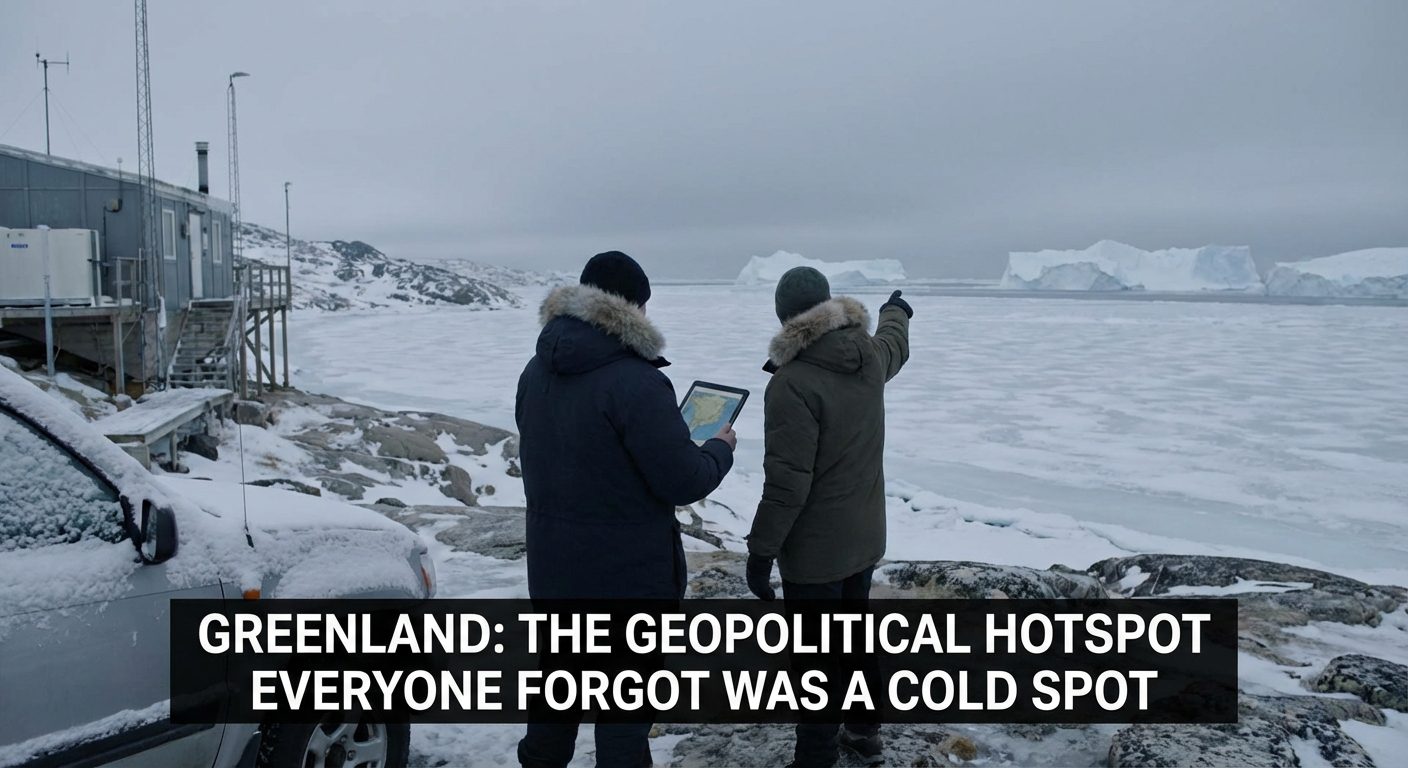
    Greenland: The Geopolitical Hotspot Everyone Forgot Was a Cold Spot

    For most of history, Greenland was the planet’s quiet, chilly attic. You knew it was there—that giant, disconcertingly white splotch on the map—but nobody really thought about what was in it. Suddenly, every global superpower is trying to find the key. Greenland has gone from being a geographic afterthought to the most contested piece of real estate on Earth, creating a fascinating, and frankly hilarious, greenland international relations crisis that nobody saw coming.

    It’s the geopolitical equivalent of discovering the old, forgotten server in the basement is not only still running, but is secretly hosting the entire company’s critical data. And now everyone wants the admin password.

    So, Why is Everyone Suddenly Swiping Right on Greenland?

    It turns out the world’s biggest island is having a major glow-up, thanks to a convergence of factors that read like a Tom Clancy novel written by a geologist and a shipping magnate.

    • The Great Melt: Climate change, the unwelcome guest at every global party, is rapidly melting Greenland’s ice sheet. While existentially terrifying, this has a practical side effect: newly accessible shipping lanes. The fabled Northwest Passage is becoming less ‘fabled’ and more ‘a viable shipping shortcut,’ which is a huge deal for global trade. It’s like the planet’s network admin just opened up a new, faster data port.
    • A Trove of Buried Treasure: Beneath all that ice lies a treasure chest of rare earth minerals. These are the unsung heroes of your smartphone, electric car, and every other piece of modern tech. As global supply chains for these minerals become more fraught, Greenland looks like a pristine, untapped source. It’s like finding out your dusty attic is lined with solid gold.
    • Location, Location, Location: Sitting strategically between North America and Europe, Greenland is the ultimate military and scientific observation deck for the Arctic. For countries like the US, Russia, and China, having a foothold there is like having the high ground in a snowball fight, but with much higher stakes.

    A Comedy of Diplomatic Errors

    The sudden scramble for influence has led to some truly awkward diplomatic moments. The United States famously, and very publicly, tried to buy Greenland from Denmark in 2019, which is the international relations equivalent of trying to acquire a subsidiary by yelling at its parent company in a parking lot. Denmark’s response was, essentially, “Thanks, but it’s not for sale, and also, that’s a weird thing to ask.”

    Meanwhile, China has been playing the long game, offering to build airports and fund research under its “Polar Silk Road” initiative. This is the classic “I’m just here to help you optimize your infrastructure” approach, which makes everyone else nervously check their system permissions. And Russia? They’re just beefing up their longstanding military presence, like the old building superintendent who’s seen it all and reminds everyone that they were here first.

    The Real System Update

    This whole situation isn’t just about a chilly island. The Greenland international relations crisis is a perfect microcosm of our shifting global order. The old rules don’t apply. Power isn’t just about armies anymore; it’s about resources, shipping lanes, and strategic geography. And smaller players, like Greenland itself—which is pushing for more autonomy—are realizing they hold some seriously powerful cards. They’ve gone from being a line item in Denmark’s budget to a major stakeholder, and they’re ready to negotiate. The forgotten server is now aware of its own importance, and it’s demanding a system-wide update.

  • Canada & China’s EV Tariff Tango: A User’s Guide to Global Trade’s Glitchy New OS

    Canada & China’s EV Tariff Tango: A User’s Guide to Global Trade’s Glitchy New OS

    Remember when global trade felt like a predictable, if slightly boring, game of Risk? You knew the rules, the alliances were mostly stable, and the biggest drama was someone hoarding all the armies in Australia. Well, toss that board game in the recycling. The new era of protectionism is more like a buggy beta test of a 4D chess game, where the rules change mid-match and your connection keeps dropping. The latest patch note? A surprising Canada-China EV deal, a masterclass in how mid-sized powers are trying to find the cheat codes in this chaotic new system.

    The Great Firewall of Tariffs

    For years, the global trade operating system ran on the gospel of free markets. Then, a few major players started installing firewalls. The US and EU, in a fit of economic patriotism, began throwing up tariff walls faster than a sysadmin patching a zero-day exploit. This left countries like Canada in a classic bind: stuck between their legacy system (the US) and the new, high-performance hardware coming from the East (China). With EV production being the next big platform, Canada couldn’t afford to be locked out by either side’s user agreement.

    Canada’s Ctrl+Alt+Del Moment

    So, what do you do when you’re caught in a compatibility nightmare? You find a workaround. The recently unveiled (and technically still-being-debugged) Canada China tariff agreement on EV components is a stroke of bureaucratic genius. It’s not a sprawling free trade agreement; think of it more as a surgical script designed to bypass specific blockades. While everyone else is engaged in a full-blown cyberwar of sanctions, Canada and China have quietly opened a secure port for lithium, batteries, and other critical minerals. This pivot in global trade strategy allows both nations to keep their supply chains humming without setting off every alarm in Washington.

    Features, Bugs, and Unofficial Patch Notes

    Of course, any deal this clever is bound to have some quirks. Insiders report the negotiations were a comedy of digital errors, from mismatched video conference platforms to translation software that kept interpreting “nickel” as “pickle.” The final agreement is a masterpiece of complexity that could only be loved by a tax lawyer or a database administrator. Here are some of its more… unique features:

    • Dynamic Tariff-Rate Quotas: The tariff rates aren’t fixed. They fluctuate based on an algorithm that weighs North American market sentiment, lunar new year shipping delays, and, allegedly, the current mood of a specific customs official in Prince Rupert.
    • Blockchain-Verified Rules of Origin: To avoid upsetting their southern neighbors, every gram of cobalt is tracked on a blockchain. The system is theoretically foolproof, except for a known bug where it occasionally flags a shipment of EV batteries as being “15% poutine” by origin.
    • The “Eh-I” Clause: A uniquely Canadian addition, this clause allows for a 48-hour “cooling off” period on any dispute, provided both parties attend a virtual meeting where they’re not allowed to talk business and must only discuss the weather or hockey.

    This intricate Canada China tariff agreement is more than just a deal; it’s a new playbook for global trade. It proves that in an era of digital walls and economic firestorms, the most successful players won’t be the ones with the biggest servers, but the ones with the cleverest hacks. Welcome to the great reboot.

  • China’s Population Dropped, and Now the Global Economy Needs a Hard Reboot

    China’s Population Dropped, and Now the Global Economy Needs a Hard Reboot

    The global economy has been running on a single, very powerful line of code for about 40 years: `while (china.population.isGrowing()) { sellMoreStuff(); }`. It was a beautiful, infinite loop of prosperity. But a recent system diagnostic revealed a critical error: the loop condition is now returning false. China’s population is shrinking, and the world’s economic motherboard is starting to smoke a little.

    For years, everyone from baby formula tycoons to luxury car manufacturers looked at China’s demographic charts and saw a staircase to heaven. It was the ultimate user acquisition strategy. Now, they’re looking at the same charts and seeing a 404 error: New Customers Not Found. This isn’t just about one country; it’s about the entire operating system of global trade realizing its primary user base has suddenly decided to stop creating new accounts.

    The Surprise Winners: Who Got Promoted During the Glitch?

    Every system crash creates unexpected opportunities. While some are staring at a blue screen of death, others found a backdoor to the admin panel. The winners in this great demographic reshuffle include:

    • Vietnam, Mexico & India: These countries are the designated fallback servers. As companies look for the new “world’s factory,” these nations are seeing their manufacturing sectors get a massive, unplanned upgrade.
    • Automation and Robotics Firms: Can’t find a million new factory workers? No problem. Just build them. The demand for robots that can assemble, weld, and pack is exploding. It’s the ultimate IT solution: if the user is the problem, replace the user with a script.
    • The “Silver Economy” Companies: Businesses focused on elder care, retirement living, and healthcare are the new growth market. They pivoted from chasing toddlers to catering to a massive, aging population. It’s like switching your app’s target from Gen Z to their grandparents.

    The Unfortunate Losers: Holding a Ticket for a Canceled Flight

    Of course, for every winner, there’s someone whose entire business model just got deprecated without warning. The losers are the ones who bet the entire farm on a perpetually growing young China:

    • Infant-Focused Industries: Companies selling diapers, formula, and tiny adorable shoes are experiencing a sudden, dramatic drop in their total addressable market. Their key demographic literally isn’t being born anymore.
    • Global Luxury Brands: The dream of selling a billion designer handbags is hitting a demographic paywall. The pool of young, aspirational consumers who were supposed to power the next century of growth is smaller than projected.
    • Commodity Exporters: Countries like Australia and Brazil, which sold mountains of iron ore and soybeans to build a China that was endlessly expanding, are now seeing their biggest client cut back on orders. Their API key to the China growth engine is getting rate-limited.

    So, is it time to panic? Probably not. The global economy isn’t crashing so much as it’s undergoing a massive, chaotic, and completely unplanned system migration. The world is basically debugging in production, and while it’s causing some strange errors, it’s also forcing a much-needed update to a very old piece of code.

  • Davos 2026: The World’s Most Expensive Game of Musical Chairs

    Davos 2026: The World’s Most Expensive Game of Musical Chairs

    Every year, the world’s most powerful people gather in a Swiss mountain town to solve the planet’s problems, a process that apparently requires excellent cheese and very expensive name badges. But this year, something feels different. The usual game of geopolitical chess has been replaced with a frantic, high-altitude game of musical chairs. The music is a chaotic remix of AI-generated sea shanties and supply chain alerts, and nobody is quite sure where to sit when it stops.

    The New Seating Chart

    For decades, the front-row seats at the Davos World Economic Forum were reserved. You knew who you’d see. Now, new players haven’t just entered the room; they’ve dragged in their own ergonomic gaming chairs and are asking who controls the thermostat. The traditional power players look on with the quiet panic of someone who just realized they’ve been cc’d on an email chain they have no power to leave. The shifting dynamics in global policy mean the old seating chart has been thrown into the fondue pot. Suddenly, the nation with the most robust semiconductor strategy has a better seat than the one with the fanciest ski jacket.

    The Playlist is All Wrong

    The topics of conversation—the ‘music’ in our metaphor—have also changed. It used to be a steady rhythm of financial deregulation and trade agreements. Now, the playlist is pure chaos. One minute we’re discussing quantum computing’s impact on global security, the next we’re in a breakout session on whether a universal API can solve world hunger. It’s like the world’s project manager keeps changing the sprint goals without updating the Jira board. The leaders who can pivot from a deep-dive on carbon capture to a debate on decentralized autonomous organizations are the ones finding a chair. The others are just hoping someone explains what a DAO is before the music stops.

    When the Music Stops, Check the Wi-Fi

    The real test, of course, is what happens when a global crisis—a pandemic, a resource shortage, a rogue algorithm that buys all the world’s coffee beans—stops the music. That’s when you see who’s been paying attention. Who has a seat? Who is left standing, awkwardly checking their phone for a signal? More importantly, who is standing next to the stereo, ready to press play on the next track? Observing Davos is no longer just about tracking handshakes; it’s about watching the world’s most influential figures try to find a stable Wi-Fi connection and a secure seat in a room where the floor keeps tilting.

  • Gaza’s ‘New Management’: When Peace Plans Sound Like IPOs

    Gaza’s ‘New Management’: When Peace Plans Sound Like IPOs

    If you’ve been following the firehose of white papers and press conferences about the “day after” in Gaza, you might be experiencing a strange sense of déjà vu. It’s not the familiar cadence of international diplomacy; it’s the unnerving jargon of a Q3 earnings call for a company undergoing a hostile takeover. The latest flurry of Gaza peace plan proposals, particularly from the US and Israeli Prime Minister Benjamin Netanyahu, feel less like statecraft and more like competing S-1 filings for a very complicated, very high-stakes IPO. Welcome to Gaza, Inc., where the future is being drafted in term sheets.

    The Competing Pitch Decks

    Every good corporate restructuring needs a plan, and right now, the market is flooded with them. The US-led Gaza peace plan feels like a classic venture capital play. The pitch is to oust the legacy management, install a revitalized (read: ‘reformed’) Palestinian Authority as the interim CEO, and bring in a multinational board of directors—mostly regional partners—to oversee the rebuild. The key performance indicator (KPI) is long-term stability, with a two-state solution as the ambitious stretch goal on the product roadmap. It’s a full-stack overhaul, promising synergy and stakeholder alignment.

    Then there’s the Netanyahu plan, which reads more like a founder’s manifesto, resistant to ceding control to the new board. This proposal emphasizes a long-term “security envelope,” which sounds suspiciously like Israel retaining permanent admin privileges on the network. The plan for civil administration is… let’s call it an ‘agile development’ process, relying on “local officials with administrative experience” who haven’t been identified yet. It’s less of a comprehensive plan and more of a mission statement that firmly tables the motion on Palestinian statehood. The key takeaway is security-as-a-service, with governance TBD.

    System Integration Hell

    The real comedy begins when you consider the implementation phase. These aren’t just policy documents; they’re system architecture diagrams for a project with the world’s most demanding user base. The concept of an “international oversight committee” is basically a project management nightmare. Imagine a daily stand-up meeting with the US, Egypt, Saudi Arabia, the EU, and Israel all trying to agree on the definition of ‘done.’ Every red line is a blocker on the Jira ticket, and the sprint goals for “demilitarization” and “deradicalization” seem to be missing their technical specifications.

    The deradicalization component itself sounds like a mandatory corporate re-education seminar, complete with PowerPoints on new company values. How do you roll out a firmware update for an entire society? Who writes the documentation? Is there a help desk? These plans are trying to deploy a containerized microservices architecture onto a system that’s been running on legacy hardware with catastrophic hardware failure. The patch notes are going to be a fascinating read.

    Awaiting the Go-Live Date

    Ultimately, watching the Gaza peace plan discourse unfold is like watching a C-suite debate the finer points of a merger while the factory is on fire. The language is sterile, the frameworks are abstract, and the goals are measured in phases and benchmarks. While everyone agrees that the current operating system is broken, the debate over the new tech stack, the governance model, and the user permissions continues. Let’s just hope the final deployment isn’t stuck in perpetual beta testing.

  • Greenland: How Climate Change Turned the World’s Biggest Island into Geopolitical Boardwalk

    Greenland: How Climate Change Turned the World’s Biggest Island into Geopolitical Boardwalk

    Let’s be honest, for most of history, Greenland was the geopolitical equivalent of Baltic Avenue on the Monopoly board. You knew it was there, big and white and taking up space, but nobody was fighting to build a hotel on it. Then, climate change dealt the world a ‘Chance’ card we didn’t ask for, and suddenly everyone realized Greenland isn’t just a block of ice; it’s Boardwalk, and the rent is about to get very, very high.

    The Great Melt-Off: More Than Just Water

    So, what changed? In a word: access. As the Arctic ice melts at a record pace, the things that made Greenland a frozen fortress are disappearing, revealing a trifecta of strategic goodies that has major world powers acting like desperate contestants on a reality TV real estate show.

    • New Shipping Superhighways: Remember when that one boat got stuck in the Suez Canal and broke the internet (and global trade)? Well, melting ice is opening up new Arctic shipping lanes, like the Northwest Passage and the Northern Sea Route. These routes can shave weeks off travel time between Asia, Europe, and North America. Greenland is positioned like the ultimate highway service station, offering a prime location to control, monitor, or service this new maritime traffic.
    • A Buried Treasure Chest: It turns out that under all that ice lies a vast, untapped treasure trove of rare earth minerals. These are the elements crucial for building everything from your smartphone to electric vehicle batteries and wind turbines. There’s a beautiful, bureaucratic irony in the fact that the planetary warming caused by old energy is revealing the very minerals we need for new green energy.
    • Location, Location, Location: Greenland sits squarely in the strategic sweet spot between North America and Russia. It’s the perfect perch for military bases, early-warning radar systems, and general high-tech surveillance. The U.S. has maintained Thule Air Base there for decades, but now everyone wants a piece of that prime observational real estate.

    The Players in this Cold, Cold Game

    This sudden interest has created a fascinating, slow-motion scramble. The United States famously offered to buy it, which is the international equivalent of slipping a business card under the door with a low-ball offer. China has declared itself a ‘near-Arctic state’—a geographically creative claim—and is heavily investing in scientific and economic ventures. Russia, with the longest Arctic coastline, is expanding its military presence. And caught in the middle is Denmark and Greenland itself, navigating this newfound popularity while managing a complex path toward potential full independence. They’re the homeowners of a quiet fixer-upper that suddenly got a five-star Zillow rating.

    The game has changed. What was once a vast, frozen wasteland on the map is now a pivotal piece in the global chess match of the 21st century. The race for Greenland isn’t just about an island; it’s about controlling the future of trade, technology, and security in a rapidly changing world.

  • The Great Greenland Gaffe: A Chess Game Where Someone Tried to Buy the Board

    The Great Greenland Gaffe: A Chess Game Where Someone Tried to Buy the Board

    There are moments in geopolitics that feel less like calculated strategy and more like someone unplugged the server mid-update. The 2019 saga of President Trump’s offer to buy Greenland from Denmark was one of those moments. It had the audacious energy of a chess player, instead of moving a pawn, offering to buy their opponent’s queen with cash. It wasn’t just a bold move; it was a move from an entirely different game, possibly Monopoly.

    The Board is More Valuable Than You Think

    First, let’s get one thing straight: this wasn’t just a whim about acquiring a large, chilly piece of real estate. Greenland is a queen on the geopolitical chessboard, not a pawn. Its strategic value is immense, thanks to:

    • Location, Location, Location: It’s the cornerstone of Arctic defense and sits astride potential new shipping lanes as polar ice melts.
    • NATO’s Northern Sentry: It hosts Thule Air Base, a critical U.S. military installation that serves as a powerful early-warning radar system. Losing that would be like losing your firewall.
    • Untapped Resources: It’s believed to hold vast reserves of rare earth minerals, the secret sauce for all our modern tech.

    So, the desire wasn’t illogical. The methodology, however, was like submitting a feature request on a sticky note.

    A Diplomatic ‘404 Not Found’

    The Danish reaction was a masterclass in polite confusion. Prime Minister Mette Frederiksen called the idea “absurd,” which is the diplomatic equivalent of getting an error message that says, “The function you have requested, ‘SellCountry’, does not exist.” There is no international protocol for this. There’s no form to fill out, no ticket to submit to the global help desk. The US essentially pinged a server that had no port open for that kind of request. The subsequent cancellation of a state visit over the refusal was like a user getting angry at the computer because it couldn’t divide by zero.

    The Tariff Subtext

    Lurking in the background of this whole affair was the constant, low-humming server noise of trade disputes and tariffs. The move was seen by many as part of a transactional worldview, where alliances and territories are negotiable assets, just like steel imports. It was a chaotic move that ignored the complex, centuries-old firmware of NATO alliances and international diplomacy. It was an attempt to apply a simple commercial logic to a system built on anything but. In the end, the game of chess continued, but everyone was left staring at the Monopoly money someone had thrown on the board, wondering what, exactly, just happened.