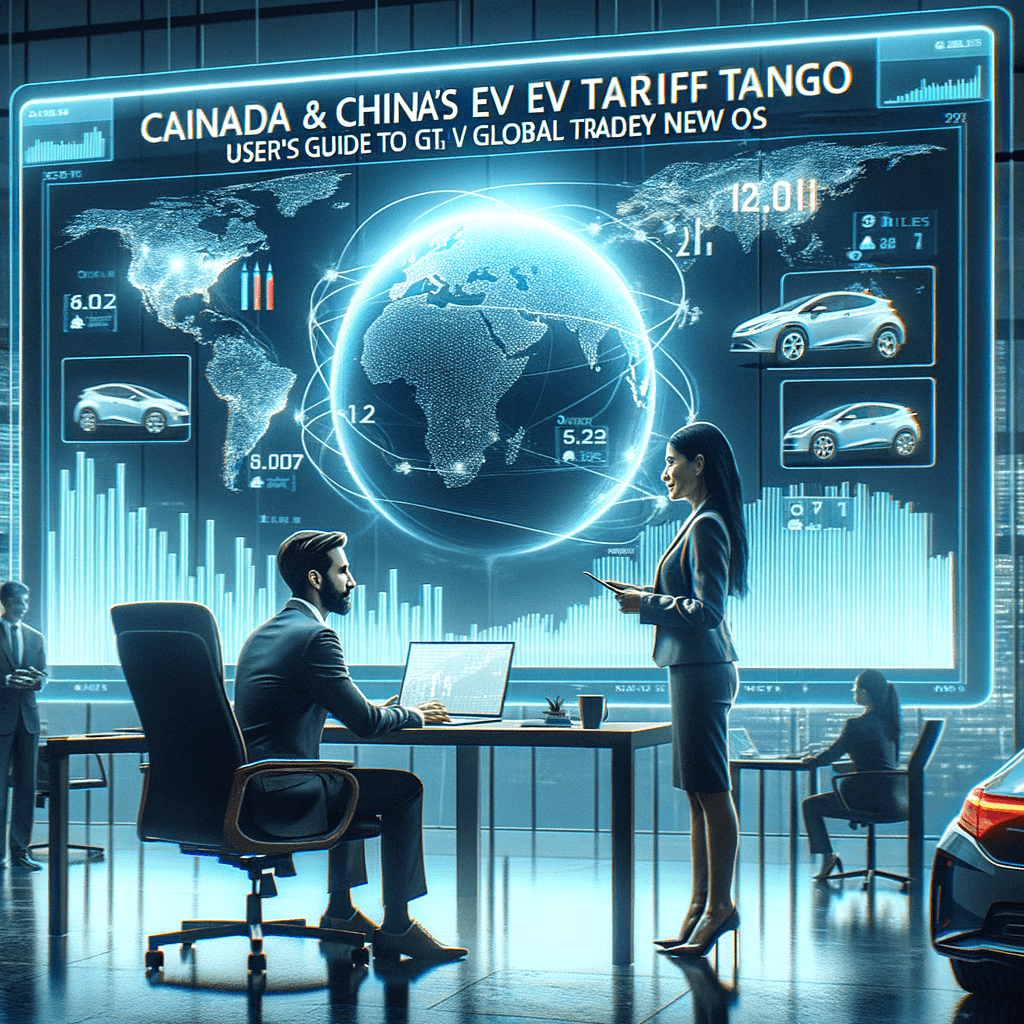
Remember when global trade felt like a predictable, if slightly boring, game of Risk? You knew the rules, the alliances were mostly stable, and the biggest drama was someone hoarding all the armies in Australia. Well, toss that board game in the recycling. The new era of protectionism is more like a buggy beta test of a 4D chess game, where the rules change mid-match and your connection keeps dropping. The latest patch note? A surprising Canada-China EV deal, a masterclass in how mid-sized powers are trying to find the cheat codes in this chaotic new system.
The Great Firewall of Tariffs
For years, the global trade operating system ran on the gospel of free markets. Then, a few major players started installing firewalls. The US and EU, in a fit of economic patriotism, began throwing up tariff walls faster than a sysadmin patching a zero-day exploit. This left countries like Canada in a classic bind: stuck between their legacy system (the US) and the new, high-performance hardware coming from the East (China). With EV production being the next big platform, Canada couldn’t afford to be locked out by either side’s user agreement.
Canada’s Ctrl+Alt+Del Moment
So, what do you do when you’re caught in a compatibility nightmare? You find a workaround. The recently unveiled (and technically still-being-debugged) Canada China tariff agreement on EV components is a stroke of bureaucratic genius. It’s not a sprawling free trade agreement; think of it more as a surgical script designed to bypass specific blockades. While everyone else is engaged in a full-blown cyberwar of sanctions, Canada and China have quietly opened a secure port for lithium, batteries, and other critical minerals. This pivot in global trade strategy allows both nations to keep their supply chains humming without setting off every alarm in Washington.
Features, Bugs, and Unofficial Patch Notes
Of course, any deal this clever is bound to have some quirks. Insiders report the negotiations were a comedy of digital errors, from mismatched video conference platforms to translation software that kept interpreting “nickel” as “pickle.” The final agreement is a masterpiece of complexity that could only be loved by a tax lawyer or a database administrator. Here are some of its more… unique features:
- Dynamic Tariff-Rate Quotas: The tariff rates aren’t fixed. They fluctuate based on an algorithm that weighs North American market sentiment, lunar new year shipping delays, and, allegedly, the current mood of a specific customs official in Prince Rupert.
- Blockchain-Verified Rules of Origin: To avoid upsetting their southern neighbors, every gram of cobalt is tracked on a blockchain. The system is theoretically foolproof, except for a known bug where it occasionally flags a shipment of EV batteries as being “15% poutine” by origin.
- The “Eh-I” Clause: A uniquely Canadian addition, this clause allows for a 48-hour “cooling off” period on any dispute, provided both parties attend a virtual meeting where they’re not allowed to talk business and must only discuss the weather or hockey.
This intricate Canada China tariff agreement is more than just a deal; it’s a new playbook for global trade. It proves that in an era of digital walls and economic firestorms, the most successful players won’t be the ones with the biggest servers, but the ones with the cleverest hacks. Welcome to the great reboot.
Leave a Reply