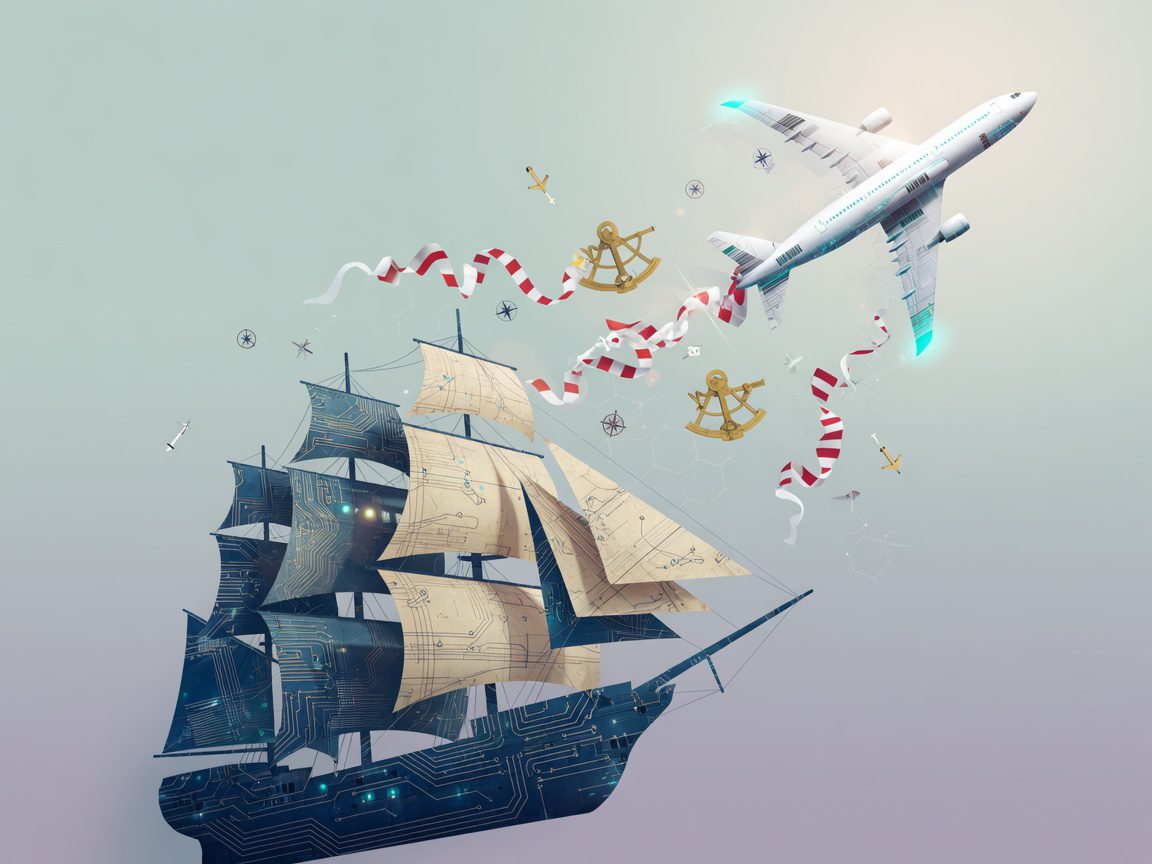
Tall Ships vs Planes: Boston’s Hilarious Airport Chaos
Boston Logan International Airport, a hub for cutting-edge aviation tech and real-time flight tracking apps, turned into a maritime comedy show last week. Tall ships from the annual Boston Harborfest festival sailed perilously close to runways, sparking delays, viral memes, and tech glitches that left travelers and pilots scratching their heads.
The Setup: When History Meets Modern Aviation
The Tall Ships Challenge brought majestic vessels with towering masts into Boston Harbor, right in the flight path shadow of Logan Airport. What started as a scenic tourist draw quickly escalated into operational mayhem. Planes on approach had to circle longer than usual, while ground crews dealt with unexpected wind patterns from billowing sails.
Tech played a starring role in amplifying the absurdity. Flight tracking platforms like FlightAware and Flightradar24 saw their servers spike with queries as users refreshed maps obsessively. AI-powered predictive models from airlines failed spectacularly, mistaking sail shadows for drone incursions. One app even issued false alerts about “low-flying vessels” in the airspace.
The Chaos Unfolds
It began innocently enough on a sunny Thursday morning. The USS Constitution replica and a fleet of international tall ships anchored near the harbor entrance. Their 100-foot masts created visual obstructions for pilots relying on visual flight rules. Runway 4R/22L, the primary arrival path, experienced a 45-minute backlog as air traffic controllers rerouted jets.
Humor ensued when a viral video captured a 747 pilot quipping over the radio, “Tower, we’ve got a pirate ship on final—request permission to board?” Social media exploded. TikTok clips of planes banking sharply over schooners racked up millions of views, complete with pirate sound effects and dubstep remixes.
Tech bloggers (yes, like me) noted how Boston’s smart city sensors, designed for traffic and weather, couldn’t handle the maritime variable. Drone operators attempting live streams of the event had their feeds throttled by FAA geofencing tech, leading to frustrated influencers pivoting to boat-based coverage instead.
Tech Failures and Workarounds
The real story lies in the digital fallout. Airport apps from Massport crashed under load, with users reporting error messages about “unexpected nautical interference.” Machine learning algorithms for baggage handling went haywire, routing luggage to the wrong terminals amid the distraction.
Passengers turned to alternative tech solutions: Reddit threads shared real-time updates via satellite messengers, while Discord servers dedicated to Logan delays filled with memes. One enterprising developer even whipped up a quick browser extension to overlay ship positions on flight maps using public AIS data.
Airlines leaned on their digital twins—simulated environments—to model the scenario. Delta and JetBlue reported using VR training modules to prepare crews for “tall ship turbulence,” a phrase that trended briefly on X (formerly Twitter).
Public and Expert Reactions
Travelers shared tales of missed connections and impromptu harbor tours from terminal windows. One family turned the delay into content gold, live-streaming a “tall ship spotting” game using augmented reality filters on their phones.
Aviation experts weighed in on the intersection of heritage events and modern tech infrastructure. “Boston’s harbor proximity makes it unique,” noted a Logan operations manager. “Our radar systems are top-notch, but nothing prepares you for 18th-century wind patterns in the 21st century.”
Meanwhile, the festival organizers embraced the spotlight, launching a hashtag campaign #ShipsVsJets that partnered with tech firms for AR experiences allowing users to “fly” virtual planes around digital tall ships.
Resolution and Lessons Learned
By Friday evening, the fleet had shifted positions, and normal operations resumed. The FAA issued a temporary NOTAM (Notice to Air Missions) highlighting the need for better integration between maritime and aviation data feeds.
This episode underscores the challenges of blending historical spectacles with hyper-connected airports. As tech evolves—think enhanced 5G for real-time harbor monitoring or blockchain for coordinated event planning—future festivals may avoid such delightful disruptions.
In the end, Boston’s airport chaos wasn’t just about delays; it was a reminder that even the most advanced systems can be upended by a stiff breeze and a canvas sail. Travelers got stories, memes got made, and tech got a much-needed stress test.
What do you think—should tall ships get their own transponders? Drop your thoughts in the comments below, and stay tuned for more coverage on how emerging tech navigates the unexpected.
Leave a Reply